
Loading
Since 1887
Before the studios, these walls made caskets, one of the oldest manufacturing stories in the Twin Cities.
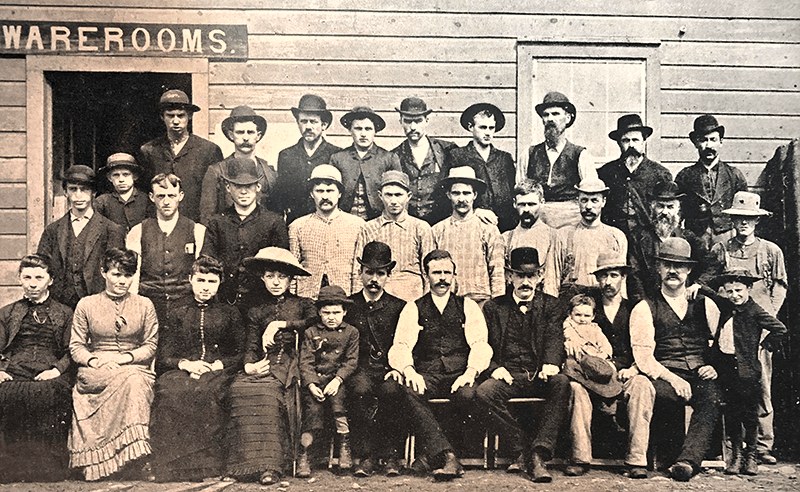
Long before Casket Arts became home to more than 150 working artists, this building was already devoted to craftsmanship. For over a century, skilled hands here shaped fine wood, cast iron, and hand-sewn textiles into objects built to last a lifetime, and beyond. Today that same devotion to craft has become artistry, filling the same walls with painters, sculptors, printmakers, and makers of every kind.
The Northwestern Casket Company traces its roots to 1882 and quickly became one of the most established manufacturers of funeral goods in the Twin Cities. In 1887 the company built the four-story brick building that now stands as Casket Arts, along with a smaller three-story structure behind it, built to craft horse-drawn funeral coaches.
For more than 100 years the factory hummed with the work of up to 100 craftspeople, men and women, producing funeral cars, ambulances, burial garments, burial vaults, and caskets, all finished by hand. Raw lumber arrived daily by rail shipment; skilled workers built and assembled each casket shell and customized its interior fabric. Advanced steam-powered systems, remarkable for their era, drove the plant’s production. Funeral directors placed orders by express telegraph or U.S. mail, and the company shipped finished pieces by train.
The Northwestern Casket Company remained in the building until 2006, when it relocated to New Hope, closing a chapter of more than a century of continuous craftsmanship on this site.
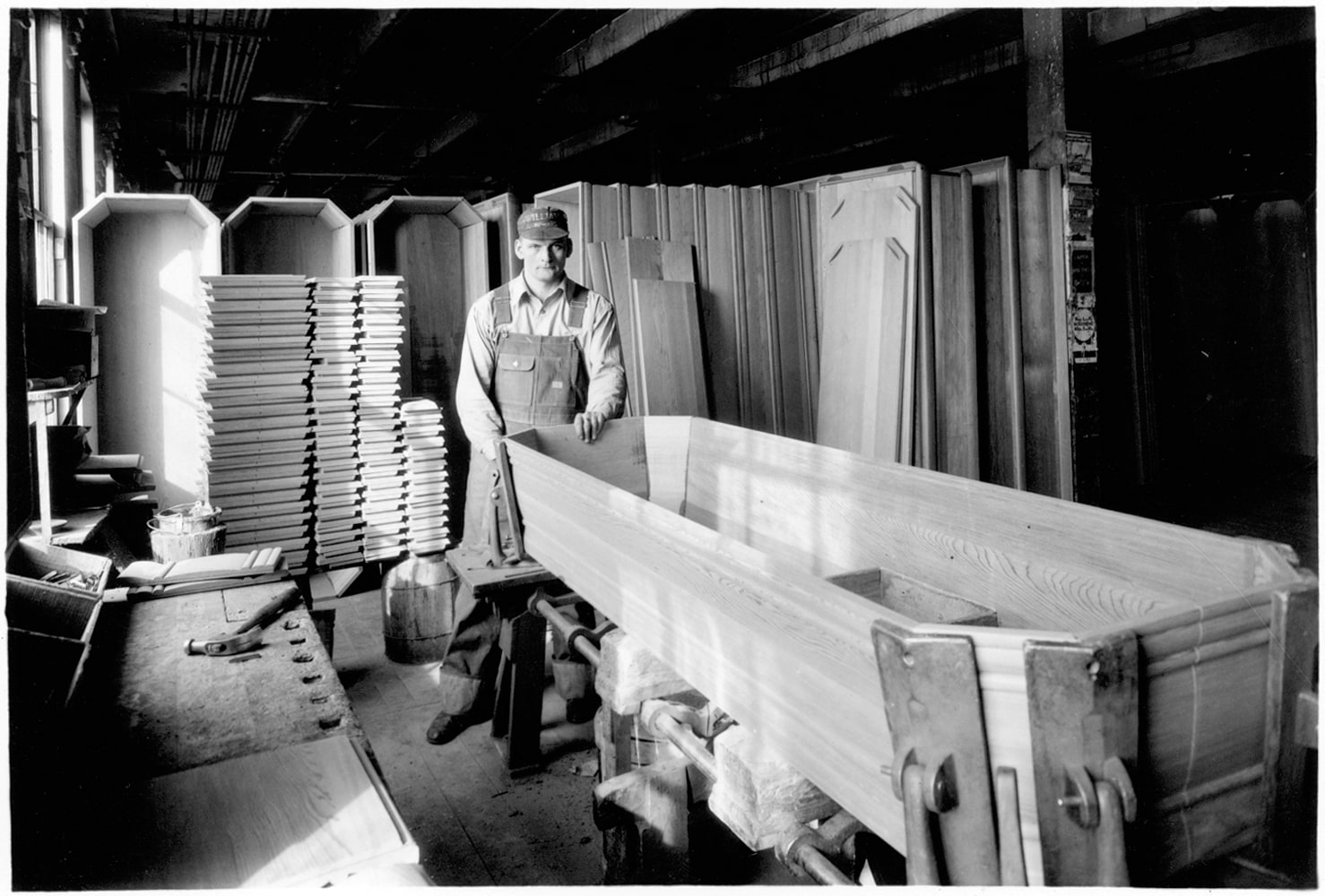
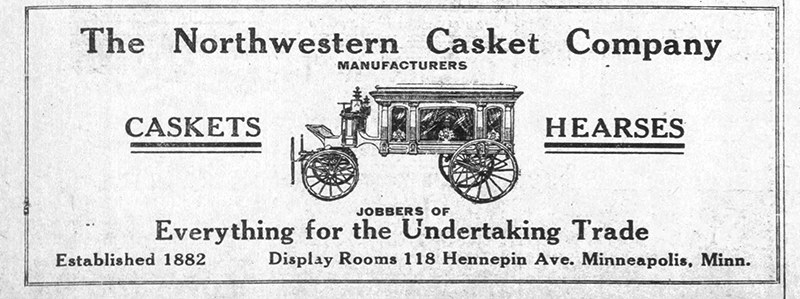
In 2006 John Kremer and Jennifer Young of the California Building Company purchased the site, seeing in its century-old bones not an ending but a new beginning. Rather than erase the building’s history they preserved it: the original brick, the century-old wood floors, and the cast iron all remain, carrying the marks of the generations who built and worked here.
The building’s industrial bones made the transition possible. What suited a casket factory (soaring ceilings, oversized freight elevators, reinforced floors built for heavy machinery, abundant natural light, and zoning built for hands-on manufacturing) turned out to be exactly what working artists need: room for kilns, welding, and large-scale sculpture; the ability to move big work in and out; the kind of durable, unpretentious infrastructure a working studio requires, not a gallery. The industry changed. The building did not have to.
That continuity runs literally through the walls. The building is still heated by steam, carried through its original cast iron radiators and driven by two boilers original to the factory. One, now converted to run on gas and oil, keeps the building warm today. The other sits retired but in place. It once ran on wood scraps and sawdust, fuel drawn straight from the casket shop’s own production line.
By 2007 the transformation was complete: a working casket factory reborn as the Casket Arts Community, a home for studio artists across every medium. Where craftspeople once built with wood, iron, and fabric, artists today build with paint, clay, and imagination, the same devotion to hands-on craft, continued.
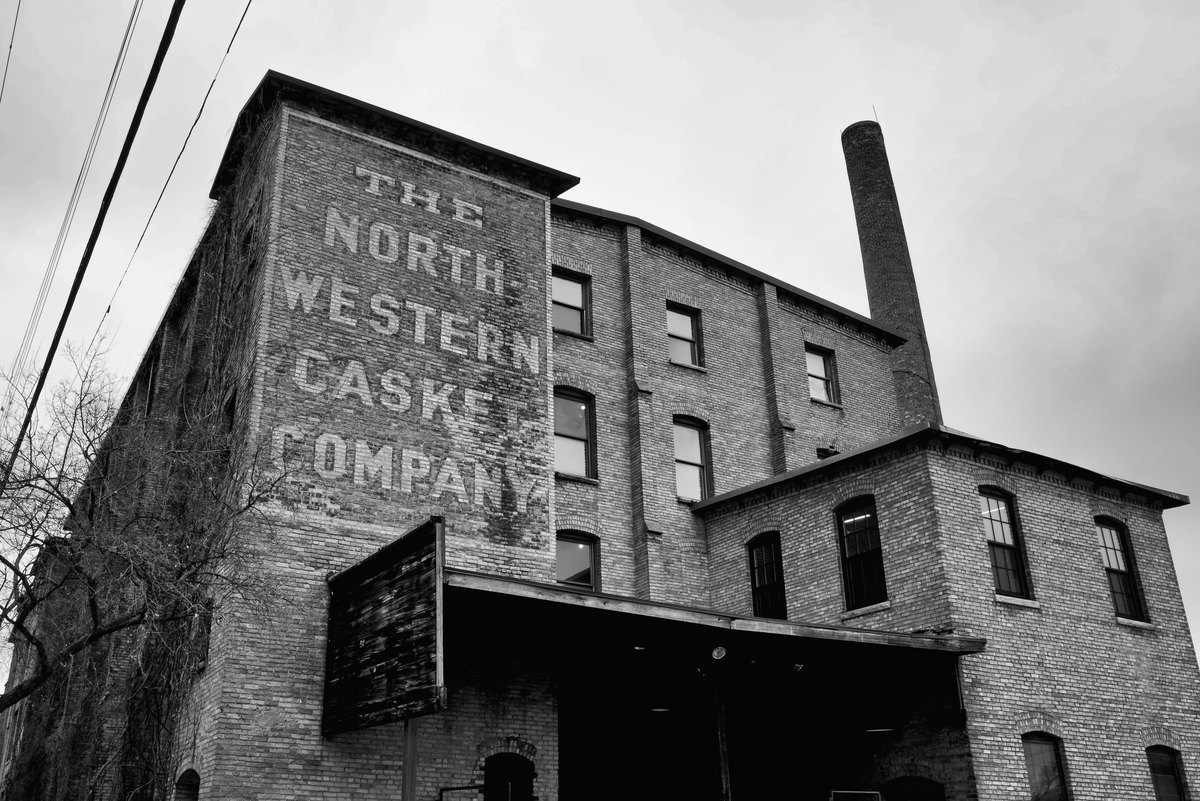
Casket Arts is now home to roughly 154 artists working across a three-building campus, including a sculpture courtyard. Painters, printmakers, photographers, textile artists, jewelers, and sculptors keep studios within walls that have always been a place of making.
The building sits within the Northeast Minneapolis Arts District, one of the largest and most active concentrations of working artists in the country, placing Casket Arts at the heart of a neighborhood built around the same values that shaped it: craft, community, and creative work made by hand.
Each year Casket Arts throws open its doors for Art-A-Whirl, the neighborhood’s signature open studio tour. Every November the building hosts its own fall event, Open Casket, held the second weekend of the month alongside sister events across the district; each December a Holiday Market open studio welcomes visitors on the second Saturday. Beyond these signature dates, individual studios also open on second Saturdays throughout the year, giving visitors regular chances to see the work and the building up close.
More than 140 years after the Northwestern Casket Company began producing funeral goods on this site, Casket Arts carries that legacy forward in a new form. The same brick, the same floors, the same devotion to work made by hand, now shaping the practice of over 150 artists at the center of the Northeast Minneapolis Arts District.
Photographs courtesy of the Northwestern Casket Company archives. A deeper Casket Arts legacy archive is in the works and will live here. Meanwhile, see about the hub or meet today’s makers.